Shaping High-Stakes Decision Environments
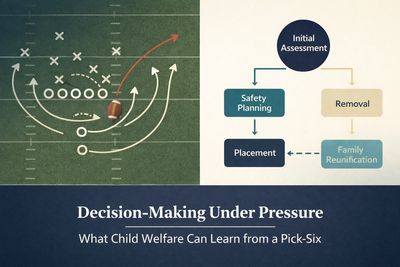
Child welfare leadership is not a theoretical exercise. It is a high-stakes decision environment shaped by pressure, ambiguity, public scrutiny, and human complexity.
Dr. Channing L. Collins delivers research-informed keynote presentations and executive trainings that help leaders strengthen judgment, reduce bias, improve accountability, and prepare systems before crisis occurs.
Her work bridges scholarship, frontline realities, and implementation strategy—equipping agencies to make better decisions under pressure.
Research-informed leadership conversations that strengthen child & family systems under pressure.
1. Implicit Bias in High-Stakes Decision Making
Beyond Awareness: How Bias Quietly Shapes Risk, Removal, and Accountability
Focus:
• How vague statutory language (imminent risk) creates space for bias
• Media framing & narrative influence (your dissertation strength)
• Organizational guardrails to reduce bias at the point of decision
2. Football Pick-Six & Child Welfare
What High-Performance Teams Teach Us About Decision-Making Under Pressure
Child welfare decisions happen under:
• Time pressure
• Public scrutiny
• Incomplete information
• High consequences
A Pick-Six happens because:
• Anticipation
• Preparation
• Pattern recognition
• Team alignment
• Situational awarenes
Interactive elements:
• “Film breakdown” style case review
• Decision clock exercises
• Crisis vs. preparation mapping
• After-action review model for agencies
3. Risk-Based Case Prioritization
From Overload to Intentional Decision Architecture
4. Balancing Prevention & Protection
Ending the False Tradeoff Narrative
5. Mediation at Critical Decision Points
De-escalation as a System Strategy
Booking Inquiries
For speaking invitations or media requests, contact:
📧 info@collinsinstituteconsulting.org
📞 (219) 688-3283