Published Scholarship & Commentary
Peer-Reviewed Scholarship
Framing Mothers, Shaping Policy:
Media Portrayals & Child Welfare Implications
Journal of Public Child Welfare (2026)
Examines how media framing influences public perception, policy narratives, and racial disparities in child welfare decision-making.
National Opinion & Policy Commentary
Prevention with Protection: Making Family First Work for Every Child
Youth Today — Opinion
September 30, 2025
Examines how states can strengthen prevention efforts under FFPSA while maintaining clear thresholds for safety and intervention.
How to Protect Children Without Abandoning Prevention
The Imprint — Opinion
October 13, 2025
Examines how child welfare systems can balance safety and prevention, emphasizing the need for practical implementation strategies that align policy with frontline decision-making.
Child Safety Was Never Meant to Look Like This
Youth Today — Opinion
March 10, 2026
Examines how institutional definitions of child safety can become distorted when government enforcement practices expose children to trauma and calls for child-protection principles to remain centered on children’s well-being.
When We Treat Child Welfare Systems as Interchangeable, Families Pay the Price
The Imprint — Opinion
April 6, 2026
Examines how treating child welfare systems as interchangeable overlooks critical differences in context, capacity, and community needs, and argues for system-design approaches that allow jurisdictions to define, test, and implement reforms based on their own structures and realities.
What the Starfish Story Reveals About Child Welfare, Especially in April
Youth Today — Opinion
April 21, 2026
Examines how symbolic awareness efforts can obscure the deeper realities of child welfare and calls for year-round reforms centered on prevention, accountability, and meaningful support for children and families.
We Are Studying Child Welfare the Wrong Way: Why Understanding Systems Matters More Than Measuring Outcomes
Global SME Views — Commentary
July 2026
Examines why child welfare research must move beyond isolated outcomes and fragmented questions to study how policies, workforce conditions, decision-making structures, and family-serving institutions operate together as an interconnected system.
When the Lights Go Out, Whose Children Matter?
Youth Today — Opinion
August 25, 2026
Examines how prolonged disaster-related power outages expose inequities in child and family well-being, questioning why conditions that may be treated as neglect when experienced by individual families are viewed differently when institutional and infrastructure failures create those same conditions across entire communities.
When the Lights Go Out, Whose Children Matter?
Youth Today – Opinion August 25, 2026
Examines how prolonged disaster-related power outages expose inequities in child and family well-being, questioning why conditions that may be treated as neglect when experienced by individual families are viewed differently when institutional and infrastructure failures create those same conditions across entire communities.
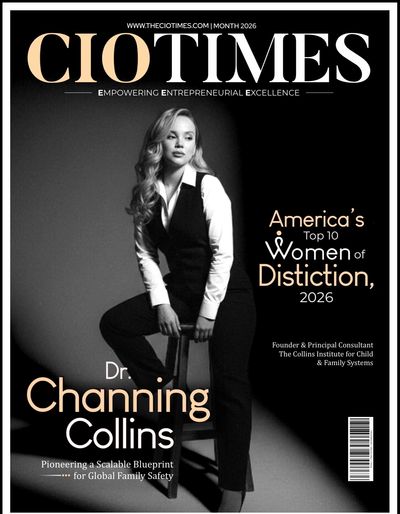
CIO Times – America’s Top 10 Women of Distinction (2026)
International Women’s Day Special Edition – America’s Top 10 Women of Distinction March 8, 2026
Dr. Channing Collins, founder of The Collins Institute for Child & Family Systems, was recognized in CIO Times for her leadership and innovation in child welfare policy, research, and systems reform. The feature highlights her work advancing data-driven child welfare strategies, strengthening workforce stability, and improving outcomes for children and families.
Read the full feature:
🔗https://theciotimes.com/magazine/Americas-Top-10-Women-Of-Distinction-2026/
The Inclusive Voice Radio Show-Women’s History Month
The Inclusive Voice – WVON Chicago March 7, 2026
Dr. Channing Collins joined host Pamela McElvane to discuss national child welfare reform, the development of the Family Systems Innovation Lab (FSIL), and strategies for aligning research, data, and frontline workforce realities to strengthen child welfare systems.
Podcast
Breaking the Silence – She Educates Series
Angels Protection Inc. February 12, 2026
A one-hour conversation on systems reform, racial equity, and sustainable child welfare transformation.
Honors & Recognition
IAOTP Top Child Welfare Changemaker of the Year

Dr. Channing L. Collins was selected as IAOTP’s 2026 Top Child Welfare Changemaker of the Year in recognition of her leadership, scholarship, and work advancing child welfare and family systems reform.
Marquis Who’s Who in America — 2026 Honored Listee

Dr. Channing L. Collins was selected as a 2026 Honored Listee for inclusion in Marquis Who’s Who in America, a biographical registry recognizing professionals for their career achievements, leadership, and contributions to their fields.
Feed & Feature Magazine
Recognized Among The Most Influential Women Leaders Driving Systems Reform & Social Impact, 2026
Dr. Channing L. Collins was featured in Feed & Feature Magazine’s 2026 edition recognizing influential women leaders creating meaningful change. The feature highlights her national work in child welfare reform, systems innovation, and public policy through The Collins Institute for Child & Family Systems. Through proprietary frameworks including the Elizabeth Ophelia Child & Family Governance Framework, the Family Systems Innovation Lab, and the Collins Imminent Harm Standard, Dr. Collins is advancing solutions designed to improve decision-making, accountability, and outcomes for children and families.

The Visionary Spark
Trailblazing Women Founders Shaping Innovation in Child & Family Systems 2026 (May 18, 2026)
Featured in Visionary Spark Magazine’s Trailblazing Women Founders Shaping Innovation in Child & Family Systems 2026 for leadership and innovation in child welfare systems reform, implementation strategy, accountability, and decision-making architecture through The Collins Institute for Child & Family Systems.

MSN.com
Top 10 Trailblazing Entrepreneurs to Follow in 2026 (May 18, 2026)
Recognized by MSN.com among the Top 10 Trailblazing Entrepreneurs to Follow in 2026 for leadership, innovation, and impact in child welfare systems reform, implementation strategy, and public policy through The Collins Institute for Child & Family Systems

Dr. Channing L. Collins Featured in Conglomerate Magazine
Redefining Child Welfare Systems Through Real-World Reform (May 25, 2026)
Dr. Channing L. Collins, Founder & Lead Architect of The Collins Institute for Child & Family Systems, is featured in Conglomerate Magazine’s “Global Leaders Driving Education, Child Welfare & Social Systems Transformation 2026” issue, discussing systems reform, implementation strategy, and equity-centered child welfare innovation.
🔗Read full feature here
